Pages

Tuesday, 20 January 2015

Planning: Lighting


Lighting

Lighting is an extremely important element of any film. It can be manipulated in order to add depth and meaning to a production. Natural lighting is said to be the default type of lighting, as it shows a lack of meaning or adventure, and it's simply neutral. Creating artificial lighting allows film-makers to alter settings at ease, and switch between a variety of glows.

There are two different forms of lighting which are commonly used within films. They are addressed as high and low key lighting. 

High key lighting involves white tones and light colours, with very little black. It is often used in an artistic manner, where photographers and film-makers wish to create a sense of upbeat, optimism or youthfulness in their productions. Many comedies and sitcoms use this type of lighting, such as Friends and How I Met Your Mother.

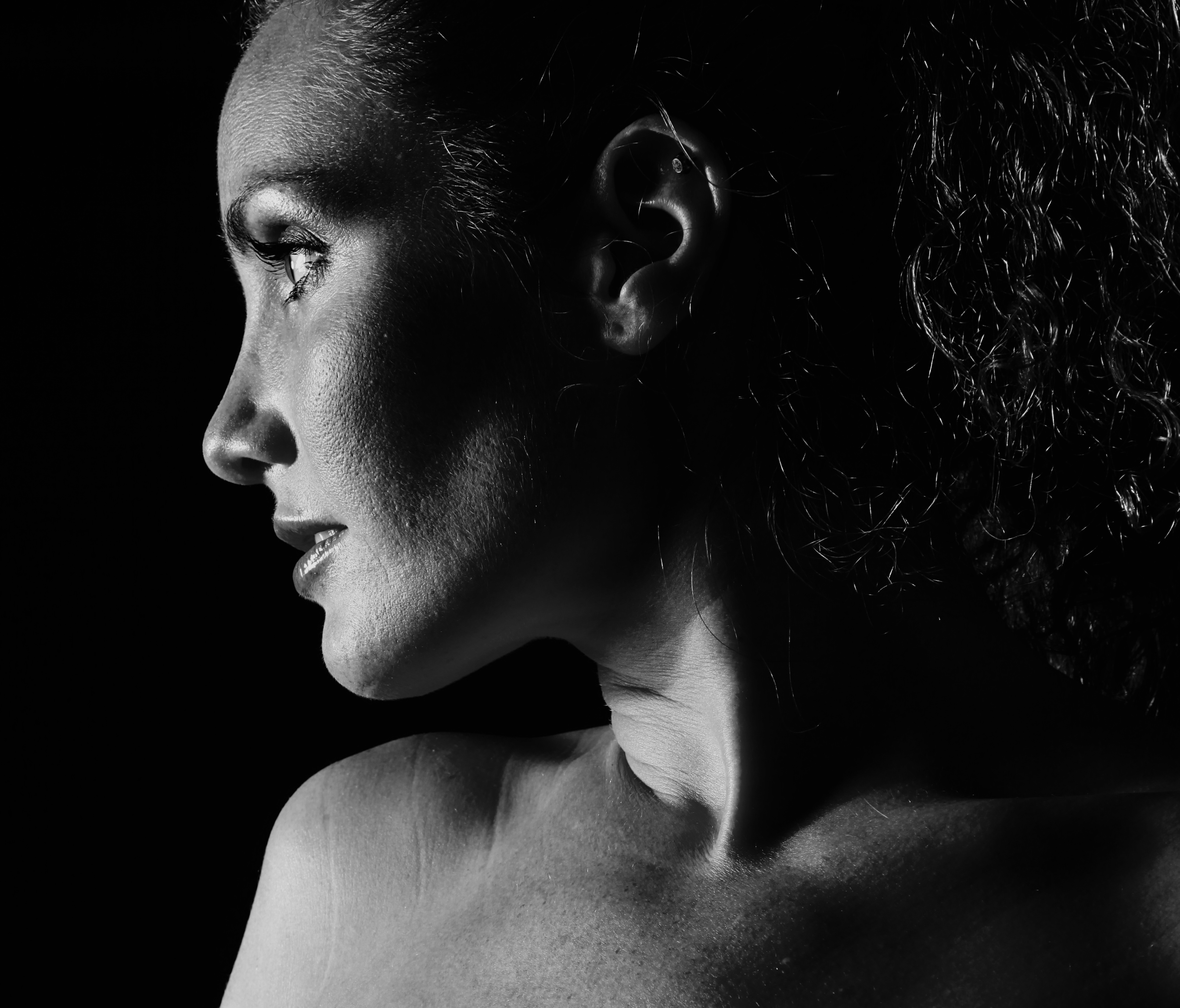
Low key lighting is the opposite to high key lighting, as one may have guessed, it relies heavily on shadows, deep blacks and darker tones. This type of lighting can either create a sense of mystery, or sombreness. A film which perfectly uses low key lighting is The Big Combo, a highly recognised film noir.

Friday, 9 January 2015

Planning: Erotic Thriller


Erotic Thriller
This type of thriller consists of erotica and thriller. It has become popular since the 1980's and the rise of VCR market penetration. An example of an erotic thriller would be Basic Instinct. This is because at the beginning of the movie, Johnny Boz, a retired rock star gets stabbed to death with an ice pick by a blonde woman whilst having sex with her. During the film a homicide investigator, Detective Nick Curran gets involved in an intensifying relationship with the murderer & antagonist Catherine Tramell This movie fits into the category of an erotic thriller due to the fact that it has elements of both erotica and thriller. For instance, the elements of erotica that is shown within this movie would be that there is a heavy amount of relationships involved in this movie especially with the investigator and the murderer. Elements of thriller within this movie would be that there is murder involved which makes the story engaging.


Wednesday, 3 December 2014

Planning: Action and Crime Thrillers

Action Thriller


This type of thriller is normally a race against the clock. It contains a myriad of violence and an obvious antagonist. Usually, it would feature a large amount of guns, explosions and large elaborate set pieces for the action to take place. Action thrillers have elements of mystery and crime films but these elements take a backseat to action. In addition to that, action thrillers normally contains a MacGuffin  which is basically a plot element which has a goal or a desired object that the protagonist pursues. However, the desired goal/object is irrelevant to the story line. A MacGuffin in action thrillers would normally be an object, a person, a place and sometimes it can include more abstract types such as love, power, money, victory, glory and so on. Moreover, a Macguffin in action thrillers is the focal point in the first scene but after that, its importance declines and therefore gets forgotten at the end of the movie.
A great example of an action thriller would be 2 Fast 2 Furious. This is because in that movie, you would usually see car chases between the protagonists (Brian O'Conner & Roman Pearce) and the antagonists (Carter Verone and his bodyguards). In that car chase, there would be explosions, cars would sort of damage whether it would be scratched, dents on the bumpers or mechanical failures. Additionally, there would be shoot out between the antagonists and the protagonists. A MacGuffin within 2 Fast 2 Furious would be the majority of the racers especially Orange Julius who was driving the orange Mazda RX-7 and was one of the many racers who managed to escape from the police.


Crime Thriller
This type of thriller is a hybrid of both crime and thriller films that offers a suspenseful account of a successful or failed crime/crimes. Crime thrillers usually emphasize action over psychological aspects. The focal points within crime thrillers are murders, robberies, chases, shootouts and double crosses. These are the central ingredients when it comes to crime thrillers. Crime thrillers usually focuses on the antagonists (in this case criminals) rather than the policemen who as usually seen as the protagonists. In some cases, crime thrillers may involve heists and robberies.
A good example of a crime thriller would Pulp Fiction. This is because if in the beginning of the movie, there was a couple ("Pumpkin" and "Honey Bunny") that attempted to rob a diner and threatened people's lives as they had realized that they could make money off the customers let alone the business. Later on the film, Jules Winnfield played by Samuel L. Jackson and Vincent Vega played by John Travolta were on their way to collect a briefcase from Brett played by Frank Whaley who went beyond the limits of the boss, gangster Marsellus Wallace. When they had arrived there, they confronted him and his men over the briefcase and when Vincent finds the briefcase, Jules confronts Brett with a gun & reads a passage from the bible before he shoots him. This fits in with crime thrillers due to the fact that they revolve around murders and shootouts.


Planning: Techno and Horror Thrillers

Techno Thrillers

Techno-thrillers are a hybrid of genres, these genres include Action, Thriller and Science Fiction. Techno-thrillers focus strongly on details, especially on the technology, which is frequently of military origin. Techno-thrillers blur smoothly into the category of hard science fiction; the defining characteristics of techno-thriller are an emphasis on real-world or possible near future technology. The most well known Techno Thriller author is called Dan brown, he has made films such as the "the lost symbol".
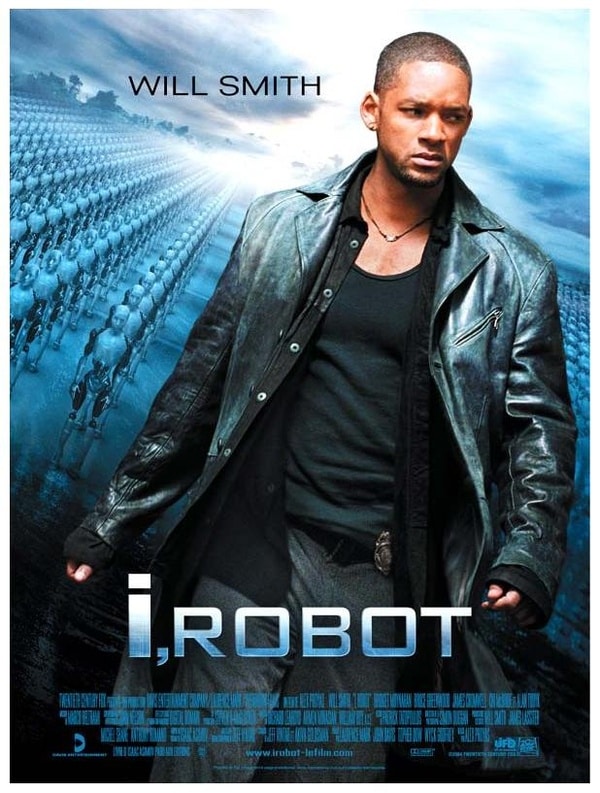
The Film that I will be talking about is called "IRobot":


IRobot was directed by Alex Proyas and is one of the most well known Science Fiction thrillers in its generation. The summary of the film goes as follows; "t is the year 2035. Everybody in the world relies on a huge system of robots, which are programmed specifically to help humans and not harm them in any way. But one person does not think that robots are helpful. Chicago homicide detective Del Spooner. but one day, he received a call from the United States Robotics (USR) about a recent death of renowned robot scientist Dr. Alfred J. Laning. Spooner immediately blamed this incident on robots without justifiable reason or proof. Then, he begins his investigation on Lanning's death, only to discover Sonny, a "unique" robot. What Spooner does not realize, is that something is about to happen. Something that is beyond even spooner's wildest dreams".


Horror Thrillers
Horror films usually involve an antagonist who is often portrayed as the "monster". This monster in different genres of thrillers can either be an actual monster or a psycho on the run for blood. The reason why people love to watch horrors is because they love to watch people die. In this case, every horror movie in the past always had stereotypical characters that end up dying in the same order. It goes from the black guy first, the lustful women second, the big guy of the group and finally the "final girl". The final girl is seen as innocent and smart showing how they are vulnerable, However, every time one of their friend dies, the final girl gets mentally stronger and stronger. Horror thrillers have 3 main camera shots, The POV to get the viewer to join in on the action or see what they see, cut away shots to hide the actions of the killer or cut in shots to actually show the action clearly.


Tuesday, 25 November 2014

Planning: Binary Structures

The Binary Structuralism


The Binary Structuralism is the representation of a character. These characters within the media are taken through a process by which characters are analysed beyond what is merely shown.
The way these characters are analysed can be in various ways.
  • The way they dress
  • Their language
  • Their location
  • Where the location is shot
  • And their interactions with other people.
Characters are represented by their relationship to power and the societal value that is connected to that power.

These groups are called Stereotypes.

Stereotypes are oversimplified definitions of a person or a type of person which can be seen as a narrow definition which do not allow opportunity to change which leads to prejudice.
In the media, the producers use stereotypes in their films because they are well known and because they are subjective (good or bad depending on who). Another reason why producers use stereotypes in their films are because they
 are easily understood to a wide range of viewers, it saves time to use them and can lead to easy comic situations such as the movie Borat.


Demographics
Demographic is the form of "Categorising people". An example of being demographic would be like, if they find a student wearing a uniform doing an activity that is usually frowned upon, the community would automatically think that the whole school has this behaviour.
Sentences usually start of as "This school makes them......"

  
As with the binary Structure

The binary structure is seen with the ideal-I, audiences often look for images which compliment their own self images. As of 2009, white British account for 80% of television viewers, Because of this, lots of television shows appeal to white people which creates a system that breaks it into two parts - Good and Bad.

Age

Age has ranges, Old, Middle Aged and Young.
Old- Old people have the money, the time, but they haven't got the energy. In modern society, Old people have power, However, in the media, old people are seen as weak and unable to defend themselves making them an ultra-conservative. The age range would be 40+ to be classified as Old.


Middle Aged- Middle aged people have the money, the energy but never any time. This is because normally, the middle aged group are normally the working group. This age group are known as professionals because they have the power over the other two groups. The age range is 21-40.


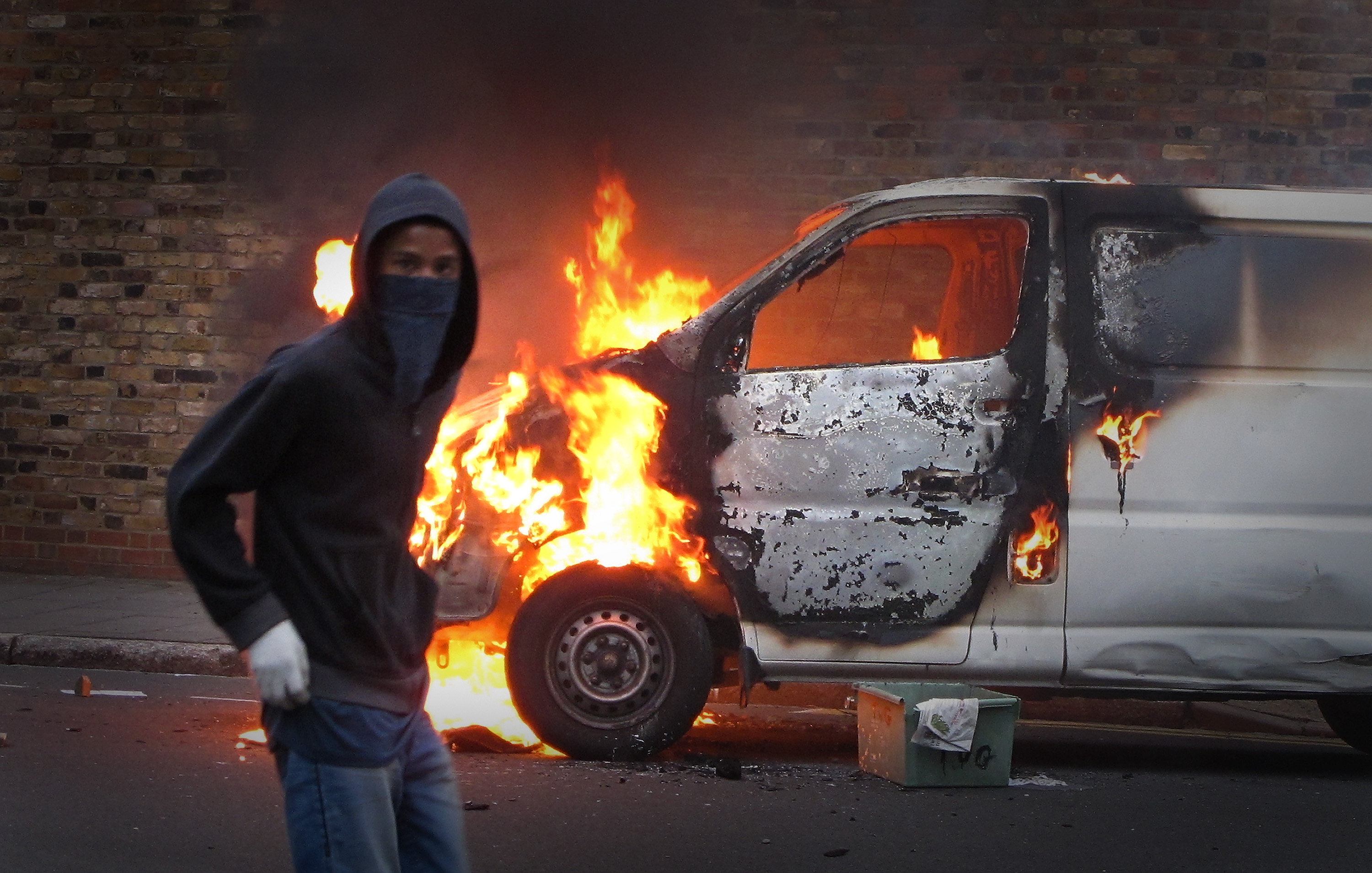
Young- This age group have the time and the energy but not money. the age group is normally 20 and below. To everyone else, they are seen as troublemakers because of stereotypes.


 Race
 EMG's (Ethnic Minority Group) are portrayed as subservient. Subservient means being prepared to obey others without any questions whatsoever. Examples of ethnic minority groups within the UK would be White Americans, Black Africans, Asians and so on. Often, ethnic minority groups are involved in drugs, violence and anti-social behaviour. Furthermore, they are self aware of the inability to climb the social ladder e.g. they are unlikely to be rich.


Class


There are  three different types of class that are stereotyped within the media. These are the lower class, the middle class and the upper class.
The upper class only associate themselves with other members within the same class. If they were to interact with lower classes, then it would usually be in employer/employee relationships. They are usually seen as highly educated/albeit ignorant to the plights of the lower class.
The lower class are always portrayed as having no work or skill, addicted to drugs/alcohol/both and if they have children, they are usually bad parents. In addition to that,  they do not care about

 Gender


Both male and female are stereotyped within the media. However, women are objectified are sexual objects for men. This means that the only time that a man would want a woman is when they want sex. They are also often subservient to men in both professional and personal relationships. An example of a woman being subservient to men in professional relationships would be that the woman either be a secretary or a receptionist and they would have to obey the rules and the boss (male) had ordered them to do. An example of a woman being subservient to her man in a personal relationship would be when the man would go to work and be the breadwinner of the family and he has ordered the woman to do the cooking, cleaning and the gardening etc. On the other hand, the male would be powerful, dominant and wants everything to be done exactly the way he wants. 


Sexuality


When it comes to media, homosexuals are often portrayed as ultra-feminine or ultra-masculine depending on the gender. Usually, male homosexuals would be seen as ultra-feminine. For example they would talk like women (" work it girlfriend") and they would usually wear skinny clothing such as skinny jeans and crop tops. In addition to that, female homosexuals would often be portrayed as ultra-masculine. For instance, they would talk like men (" What's up bro") and they would wear loose clothing such as tracksuits, trench coats and sometimes have might see them wearing clothes that have been made specifically for men. Their work roles are usually hospitality or industry based (designers, bar, club etc.) Furthermore, they live the party-boy lifestyle i.e. sex, drugs and obviously partying.


Region


Regional representations are often ignorant to the ideals of mainstream culture. Regional representation often very heavily stereotyped. London is the biggest region in the UK as this is where most people live so this means that the TV shows most satisfy that region.


Planning: Rear Window Analysis

  Rear Window


One of the films we analysed was rear window, which we then presented above. It is a rather old film published by Alfred Hitchcock in the 1954. It is largely based around the idea of scopophilia, voyeurism and sexual objectification.

The film stars James Stewart and Grace Kelly and is one  Alfred Hitchcock's very first films are well as societies' very first thrillers. 

Wednesday, 12 November 2014

Planning: Annabelle Analysis

Annabelle analysis


Annabelle is a very recent movie released in 2014 of a doll haunting and punishing a couple and their child - unborn at the start of the film however, overall it all started with satanic cultures that gave both the protagonists and the audience